Highlights at a glance
- Made service measurable and manageable for the first time
- Structured ticketing replaces fragmented communication
- Compliant for healthcare
- Time to value within a few weeks
Learn how sqanit can digitally strengthen your service as well: Get in touch.
About myoncare
myoncare is a digital health platform that enables hospitals, clinics, and physicians to create and operate semi-automated digital care pathways. Through the app, patients can exchange messages, join video calls, complete symptom check-ins, and share wearable data. Medical staff receive dashboards for monitoring, automated alerts, and optimized documentation. The goal is continuous, coordinated care before, during, and after treatment, with reduced effort and improved outcomes.
The challenge: why service became the bottleneck
As a digital health platform, myoncare works with a wide range of stakeholders: clinics, physicians, IT leads, patients. Service requests came in unstructured via email, phone, and other channels. This led to several issues:
- Knowledge silos: Information lived in the heads of individual employees. When people were on vacation or out sick, handovers were incomplete.
- Repetitive work: Similar requests had to be answered manually again and again.
- No measurability: There were no reliable figures for processing times, ticket volume, or service quality.
- Manual coordination: Many alignments across departments were required to handle requests.
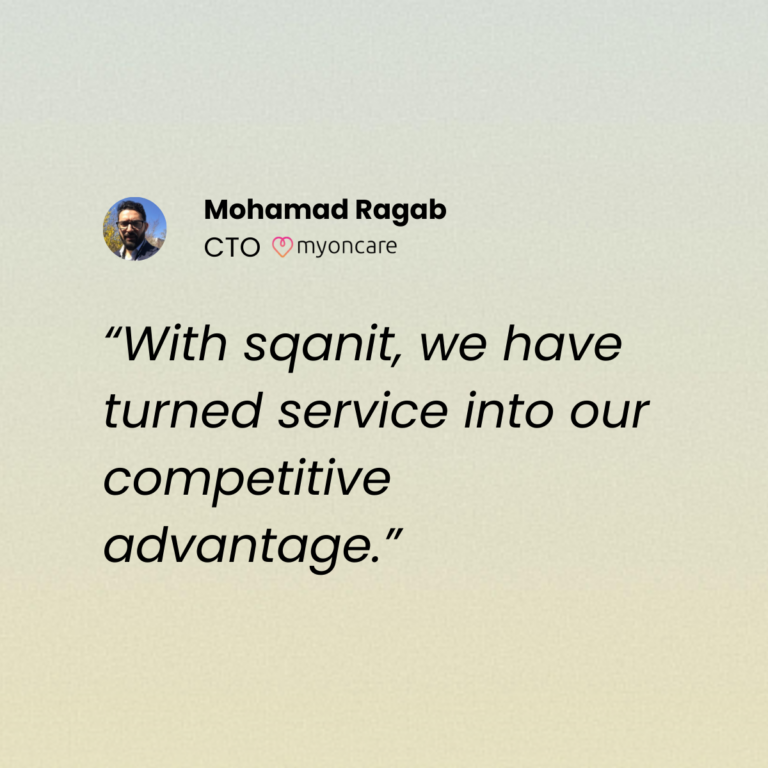
“In healthcare, we have international competitors who are getting stronger and stronger. In our view, beyond innovation, you need strong service as a real differentiator. It keeps our customers with us and is increasingly the deciding factor in winning new customers.”, explains Mohamed Ragab.
The goal was clear: professionalize service, make it measurable, and build it into a strategic competitive advantage.
The path to a solution: why sqanit?
Previously, myoncare used Confluence for knowledge management. However, it was not designed for ticketing. Pages or tasks had to be maintained manually, labels were inconsistent, and after just a few weeks there were ten different versions of the same category. Sorting became slower instead of faster.
sqanit offered a test pilot in which myoncare could validate two core criteria:
- Change in service effort
- Adoption among end users (= code scans)
The decisive factor, however, was compliance. In healthcare, especially in the German market, strict requirements apply, particularly for systems used by multiple stakeholders.
“Compliance was the deciding factor. But because of sqanit’s other medtech customers, it wasn’t an issue at all and everything was already in place.”, Ragab says. The decision was made jointly with the Head of Project Management, the QM&RA department, the CEO, COO, and the Information Security Officer.
Why sqanit convinced them
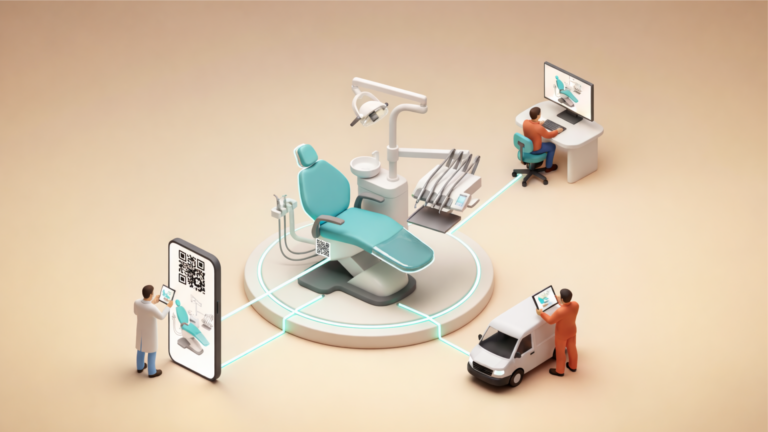
- Structured ticketing: Guided ticket creation with automatic prefill of key information
- Smart routing: Requests are automatically assigned to the right person
- Multi-stakeholder communication: Lean and streamlined through one central platform
- Compliance-ready: ISO 27001, ISO 13485, MDR, C5 already covered
- Dashboard & Analytics: Real service measurability for the first time
- QR code access: Accessible and widely adopted, at the latest since COVID
“Yes, I would recommend sqanit because everything has been considered for companies in the healthcare industry. Especially when you have several different stakeholders, communication is so lean and streamlined,” Mohamed Ragab.
The results: what really changed
Before sqanit, myoncare had not quantified its service cleanly. Emails or tasks could have been counted manually, but there was no structured tracking. With sqanit, service was professionalized.
New measurability
myoncare now tracks systematically:
- Number of tickets by category
- Time to first response
- Time to resolution
- Ticket creation time
This transparency enables continuous improvement and data-driven decisions.
Positive effects
- Faster routing: Requests are automatically routed to the right contacts
- Reduced manual effort: Structured processes instead of manual back-and-forth
- Scalable knowledge sharing: No more dependency on individual people
- International reach: Automatic translation of content into 200+ languages through integration with DeepL/Google Translate
- Higher adoption than expected: QR code access is perceived as more accessible than email or phone
“The features go so far beyond those of a general-purpose ticketing system that we definitely don’t want to go back. This is what best practice looks like in 2026.”, says Ragab.
Conclusion
myoncare has shifted its service from fragmented to professional. What was previously not measurable is now tracked and improved systematically. Structured communication via a central platform saves time, reduces errors, and creates the foundation for scalable growth, while meeting strict healthcare compliance requirements.
Key Facts
Industry: Digital Health / eHealth
Challenge: Unstructured service communication, knowledge silos, no measurability
Solution: Ticketing, smart routing, dashboard, push notifications, multi-language support
Result: Measurable service KPIs for the first time, faster routing, international scalability
Time to value: Within a few weeks (8 weeks from kick-off to go-live)
Ready to digitalize your service? Learn how you can reduce support times, activate self-service, and delight customers with sqanit: Get in touch now.